 At his audience of February 21, 2026, Pope Leo XIV, accepted and confirmed the decision of the Congregation for the Causes of Saints, ordering the publication of the Decreto super virtutibus [Decree on Virtues] for our Capuchin brother, the now Venerable Theophane Koodalloor (1913-1968). Born Michael in the Indian Province of Kerala, Theophane is the first native Capuchin of India to reach this milestone. Our historian confrere Blaine Burkey, OFM Cap., sent this information to fill us all in about his life and work . . .
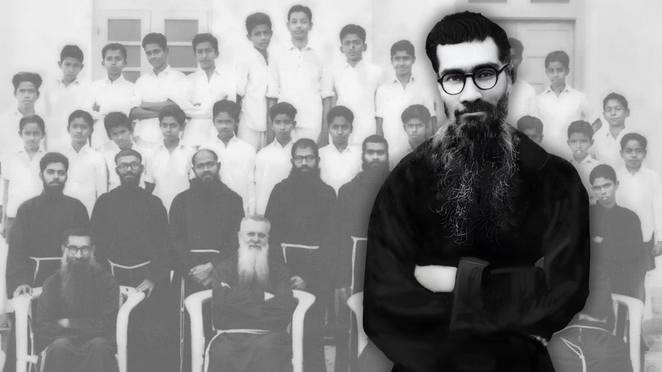
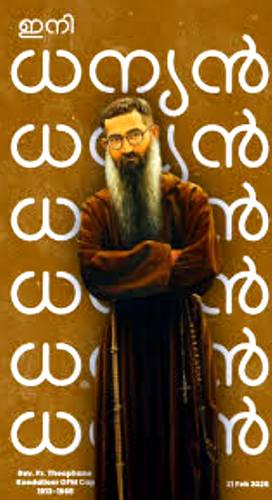 Fr. Theophane was born in a Koodalloor family, sixth among nine sons. Michael was his baptismal name. He had his schooling at the Govt. School of Kottappuram and at St. Albert’s High School, Ernakulam. From there, in response to the call to priesthood, he joined the Diocesan Seminary of Verapoly, Kerala. He entered a Capuchin Ashram and made his First Profession in 1934. He received his Ordination from the Bishop of Ajmer, His Excellency Rt. Rev. Gueso Flack.
He was very much known for his counseling, house blessings, house visits and healing through prayers. He was an intensely passionate coordinator of the Mission Retreat team. He spent ten years at St. Bonaventure Capuchin Friary at Ponnurunni. He was also the founder of the Ashram Church there under the name of the Patron St. Pius X. For most of his life, he was afflicted with various diseases that he suffered joyfully with a smile on his face. He died on April 4, 1968 at the age of 55 . His remains are buried at the Ponnurunni Guild of the Ashram.
Liturgical and paraliturgical services are conducted there, where people flock for healings and blessings. The lit-lamp offering and the flower offering are usually done by the people for intercessions and for the favours received. His death anniversary is conducted every year on the 4th of April, with “Nercha Sadya” (agape Banquet), served to everyone, prepared by the devotees themselves. His personal belongings are still preserved in a museum in his name, adjacent to the Ponnurunni Ashram. The wordings at his tomb show the life he lived:
”One who awaits the people who are troubled with pains and sufferings."